How Fed Actions Affect the Value of Your Money
Submitted by Bernhardt Wealth Management on February 12th, 2018Anyone who follows financial news at all is likely to hear references to actions taken by the Federal Reserve Board (usually shortened to “the Fed”). Most often, we hear that the Fed has acted to raise or lower interest rates, but many may not be entirely clear how this actually applies to them. Especially if you are nearing retirement and are not in the phase of life where you are particularly worried about rising interest rates making your loans more expensive, you may sometimes think that all the “Fed chatter” you hear about doesn’t really have much direct effect on you or your lifestyle.
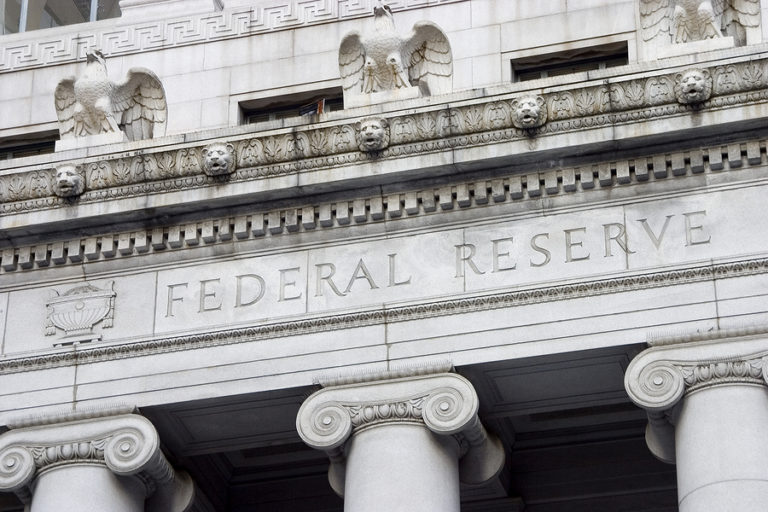 In a very general sense, you are correct. But it is worth keeping in mind that Fed actions–and, sometimes, inactions–do have a measurable effect on a topic that all of us are concerned about at one time or another: the value of the U.S. Dollar. As the Fed seeks to keep the U.S. economy along the smoothest possible path, their decisions are primarily geared to maintain the stability of the U.S. Dollar.
For a while now, the Fed has indicated that it intends to allow short-term interest rates–you may hear this referred to as the “Fed funds rate”–to rise a bit. The main reason for this is that the Fed kept the Fed funds rate at or near zero percent for several years, in the wake of the 2008 financial crisis. They took this action in order to maintain liquidity in the face of a drastic situation. This liquidity allowed the economy to continue to operate in a more or less orderly manner. To everyone’s relief, the Great Recession finally eased, and the U.S. economy eventually resumed a steady, though slow, rate of growth that has remained in effect until the present.
Now, as the U.S. economy expands, the Fed is monitoring the rate of inflation. When an economy is growing, it is susceptible to inflation, mainly because of increasing wages and, if inflation gets out of control, it can derail the economy. The Fed presently has a target range for inflation of around 2 percent (the current rate, as announced last month by the Department of Labor, is 2.1 percent).
As long as inflation stays in its desired target range, the Fed will probably permit short-term rates to increase, likely to as much as 1.5 percent. This gradual increase in the Fed funds rate is intended to help stabilize the value of the dollar. After all, the price of anything–including a nation’s currency–is theoretically a function of supply and demand. Interest rates reflect the price of the U.S. Dollar, and the Fed seeks to maintain it in parity with supply and demand, keeping the value stable. After all, a stable dollar is good for everyone, from retirees to recent college graduates entering the job market for the first time.
