Living in a Post-COVID-19 World
Submitted by Bernhardt Wealth Management on July 20th, 2020Given the continued rise in infection and hospitalization rates in 40 of the 50 states, it seems obvious that we are nowhere close to living in a “post–COVID-19 world.” And yet, experience and common sense persuade most of us that somehow, some way, modern science will find an answer to this latest global health threat. Vaccination trials are proceeding, with encouraging results being reported by the National Institutes of Health (NIH) and others. Other developments in treatment offer greater hope for those hospitalized with the illness caused by the novel coronavirus.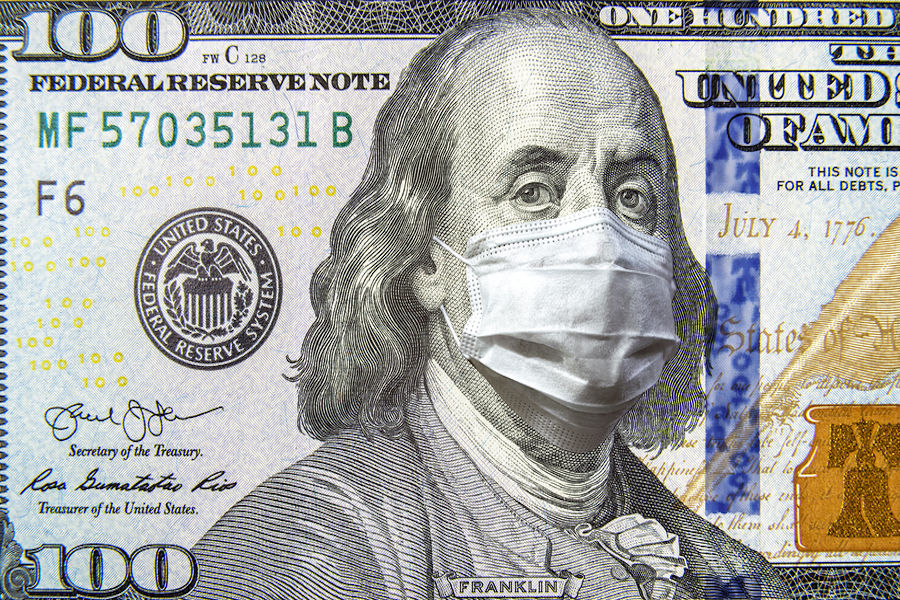
But what can we expect the post-pandemic economic landscape to look like? The answer, not surprisingly, depends heavily on one’s perspective. Progressive and left-leaning thinkers offer one set of opinions; more conservative observers’ thoughts tend to run in a different direction.
Recently, the online magazine Fast Company gathered six expert observers’ predictions for some of the prominent features of the post-pandemic economy and the implications for American capitalism. Their comments ranged from greater government oversight of corporate mergers (referencing frustrations with a perceived lack of supervision in how government stimulus funds were doled out to corporations), more direct government spending on the economy (especially to deal with the effects of mass unemployment), government-led investment in infrastructure projects (particularly involving green and renewable energy), investment in traditionally under-represented minority communities, and widespread de-coupling of healthcare from employment.
Not surprisingly, conservative commentators diverge from the view that embraces government intervention and spending as the principal feature of post-pandemic capitalism. Though a recent article in Policy Forum suggests that the small-government policies that have dominated since the Reagan-Thatcher era may not be sufficient for the survival of global economies in the wake of the pandemic, conservative thinkers still insist that the foundation of any economy is its ability to be self-sufficient in times of crisis. These observers insist that the rush toward globalism has been revealed as problematic for the long-term health of the U.S. economy and believe that the key to economic resiliency is the health of U.S. manufacturers, both small businesses and corporations. Nevertheless, even within the GOP, the sudden crisis brought on by the pandemic has stimulated intramural debates about the advisability of strengthening the social safety net, a conversation that was not a notable feature of the pre-pandemic Republican Party.
While the economic realities of the post–COVID-19 economy in the U.S. and elsewhere probably lie somewhere between the extremes of liberal and conservative prognostications, one thing is certain: the future will be different as a result of our experiences with this pandemic. Some industries—especially those heavily dependent on large gatherings of people in confined spaces—will face difficult shifts in their business models, and some will not survive. Other, newer businesses will continue to emerge—some in direct response to the challenges of the pandemic—that will become long-term fixtures in the economic landscape. Whatever “normal” looks like after this public health crisis has passed, it will be different than the normal we used to know.
If you’d like advice or guidance about your investments, your long-term planning, or any other matter of financial concern during these changing times, we would be delighted to spend time with you, learn about your concerns, and offer answers to your questions. If we can help, please contact us. And if you’d like to read our recent article, “Consumers and the Pandemic: Implications,” please click here.
